Home » People Referenced » Frank E. Manuel

Frank E. Manuel
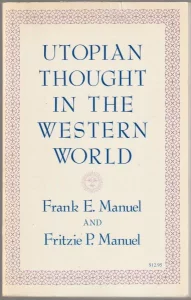
Frank Edward Manuel was an American historian, Kenan Professor of History, emeritus, at New York University and Alfred and Viola Hart University Professor, emeritus, at Brandeis University. He was known for his work on the idea of utopia. In 1980, he and his wife, Fritzie P. Manuel, won the Ralph Waldo Emerson Award for their book Utopian Thought in the Western World (1979). In 1983 they won the National Book Award for the paperback edition of the same work.
Excerpts
Once we are committed to this ideology of cosmic evolution, the narrow five millennia of recorded history with their minor progressions, regressions, cycles, and sinusoidal curves appear terrifyingly diminished. And yet the neo-evolutionists would insist that their teachings are raising man to a higher rather than a lower place in the scheme of things. Far from being dethroned as the king of nature, he is restored to a grander position than he occupied before the Copernican revolution.
Utopian Thought in the Western World
Frank E. Manuel
If there was an infinity of worlds, as Bruno maintained, for whom in particular had Christ died on this earth? If the universe was eternal, what would become of God the Creator? Acceptance of the Copernican cosmology was a religious act that bore serious consequences in its contradiction of the biblical texts.
Utopian Thought in the Western World
Frank E. Manuel
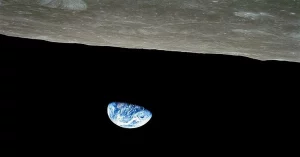
Moon voyages became popular in the 1630s, their underlying inspiration Galileo’s telescope and the curiosity it piqued about the planet; but the way of reaching the new world on the moon was more important than the substance of an ideal society. Kepler’s Somnium of a man on the moon viewing the earth was in the service of the Copernican hypothesis.
Utopian Thought in the Western World
Frank E. Manuel
The earth may now be a mere planet moving around the sun, but man is no longer confined to it. His spiritual energy, his reason, his brain power, his psyche, his consciousness have become the center and the purpose of the whole universe, of the cosmic process.
Utopian Thought in the Western World
Frank E. Manuel
One group of the religious looked upon the absorption with secondary causes as a deflection from contemplation of the divine Primary Cause and hence suspect, if not heretical, especially when propositions like the Copernican hypothesis, touted as absolute truths, contradicted the literal sense of the Bible.
Utopian Thought in the Western World
Frank E. Manuel