Jesus Christ,
deny your maker
Read it in the books,
in the crannies and the nooks,
there are books to read
The study of cosmology shows how our relationship to the universe and our fellow humans is inextricably conditioned by our underlying belief systems and mythologies. As every thoughtful person realizes, the life of each civilization-and every individual-is influenced by underlying mythologies, whether sacred, scientific, secular, or profane.
In our century, psychology has shown that those who do not believe that their lives are shaped by an underlying mythology are always those who are the most captivated by its spell.
David Fideler
Jesus Christ, Sun of God
Ancient Cosmology and Early Christian Symbolism
Jesus, don’t want me for a sunbeam –
Sunbeams are never made like me

Take a look, it’s in a book
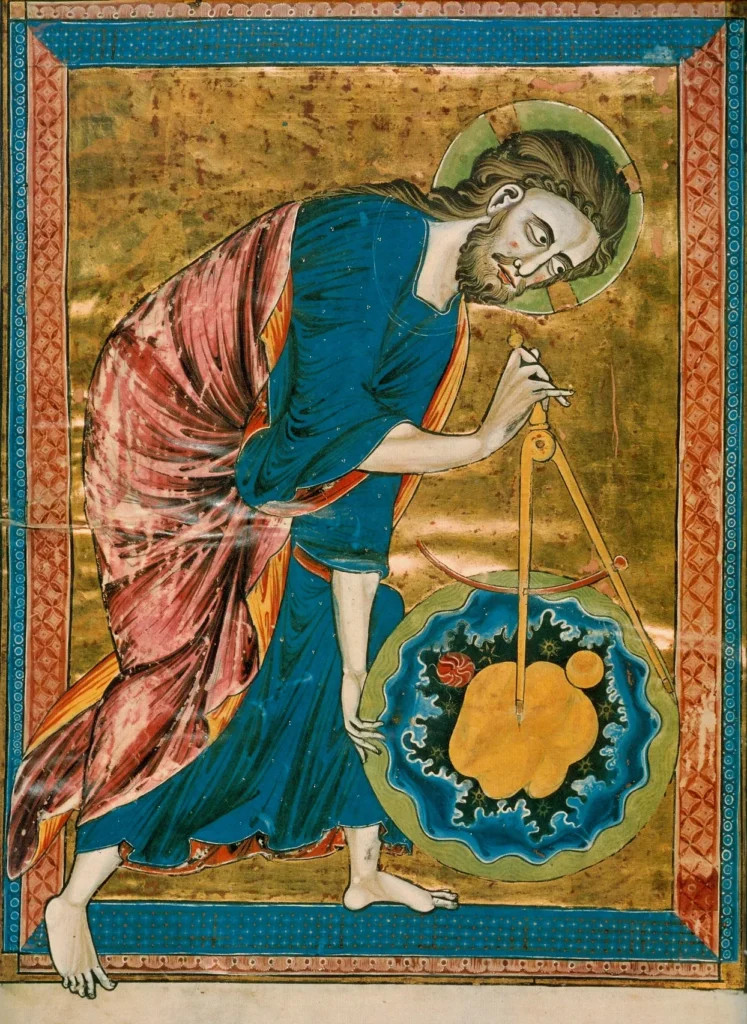
In his chapter of the antiquity of Masonry, [Captain George Smith] makes it to be coeval with creation, ‘when,’ says he, ‘the sovereign architect raised on Masonic principles the beauteous globe, and commanded the master science, Geometry, to lay the planetary world, and to regulate by its laws the whole stupendous system in just unerring proportion, rolling round the central sun.’
The term [revolution] derives from the Latin substantive revolutio, which was unknown in classical Latin but was used in the early Middle Ages by St. Augustine and other Christian writers.
Translated into Italian as rivoluzione in the early Renaissance and then into French and English as revolution, the term initially meant the return of a moving object to its place of origin—particularly the movement of celestial bodies around the earth.
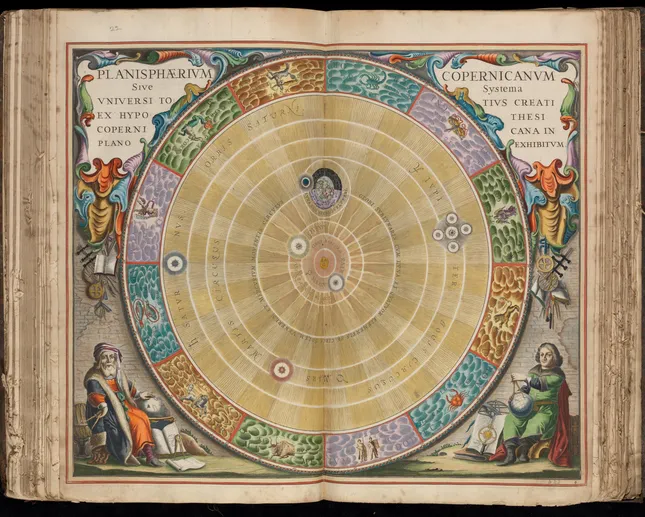
Copernicans used it increasingly in the sixteenth and seventeenth centuries to describe their unsettling new concept of the earth revolving—axially and orbitally—around the sun.


Oh for one more trip around the sun